The Children of Esma
All about the various inhabitants of Esmara
(including those that are guests to the world)
1. Ithinesh
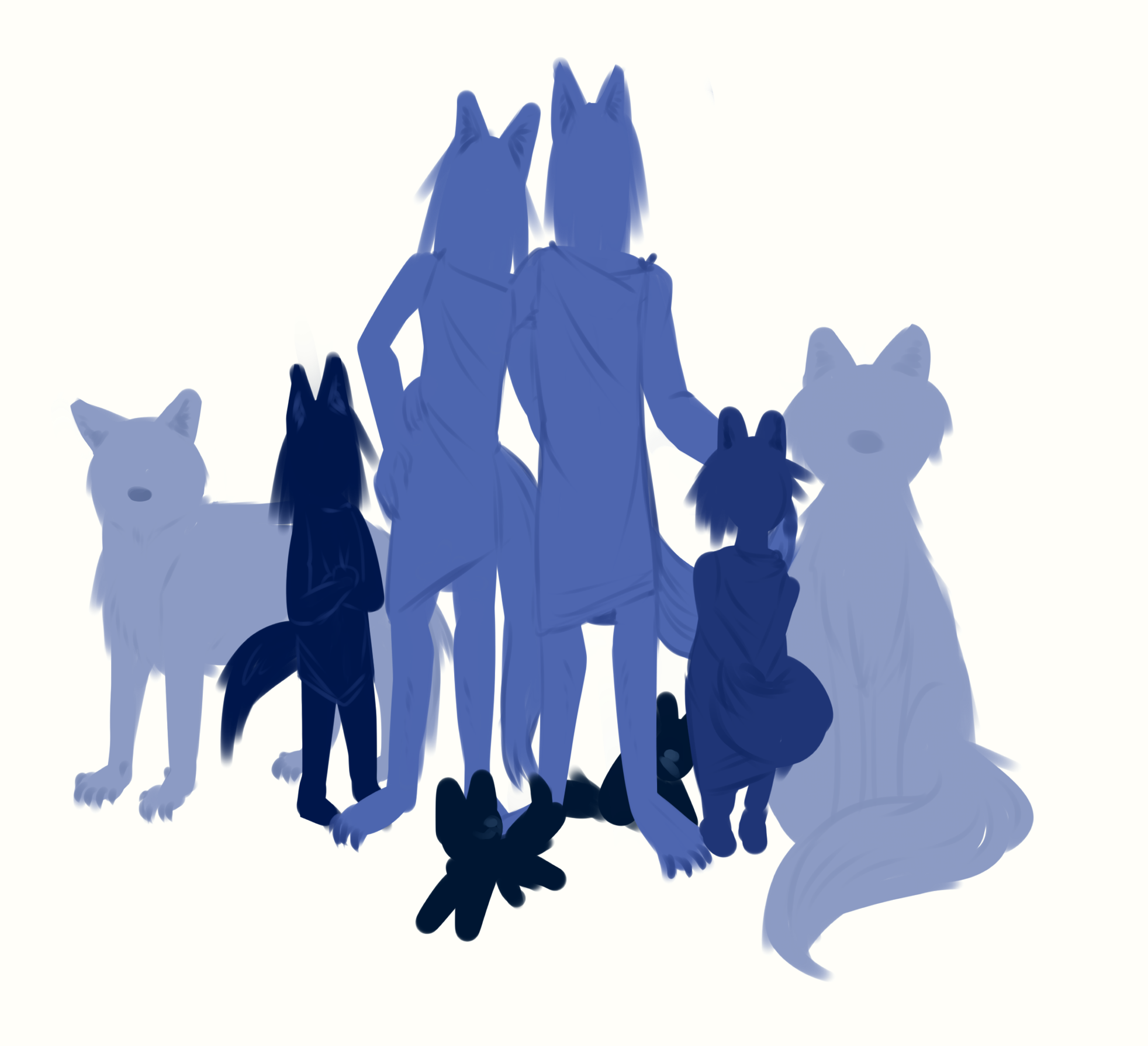
Said to be the ‘original’ species made to roam and enjoy this world created for them.
They share their shape with that of their deity, and have the ability to shift into a human form, though they retain their ears, tails, parts of their fur, their claws and their fangs.
They mostly live in packs all over Esmara, either living solely in their wolf forms, or switching at leisure to their more human forms and building little societies of their own with villages or even towns that are open to all passing through or wishing to linger.
After the events of the Great Divide:
The Ithinesh separated from the other species entirely and returned to their forests and wilderness where they always felt the most at home. The packs fend for themselves, and travelers and merchants are advised to stick to the roads and leave the wolves be if they see any.
While the Ithinesh are wary to start confrontations, they can be quick to perceive challenges and meet them fiercely.
2. Dragons
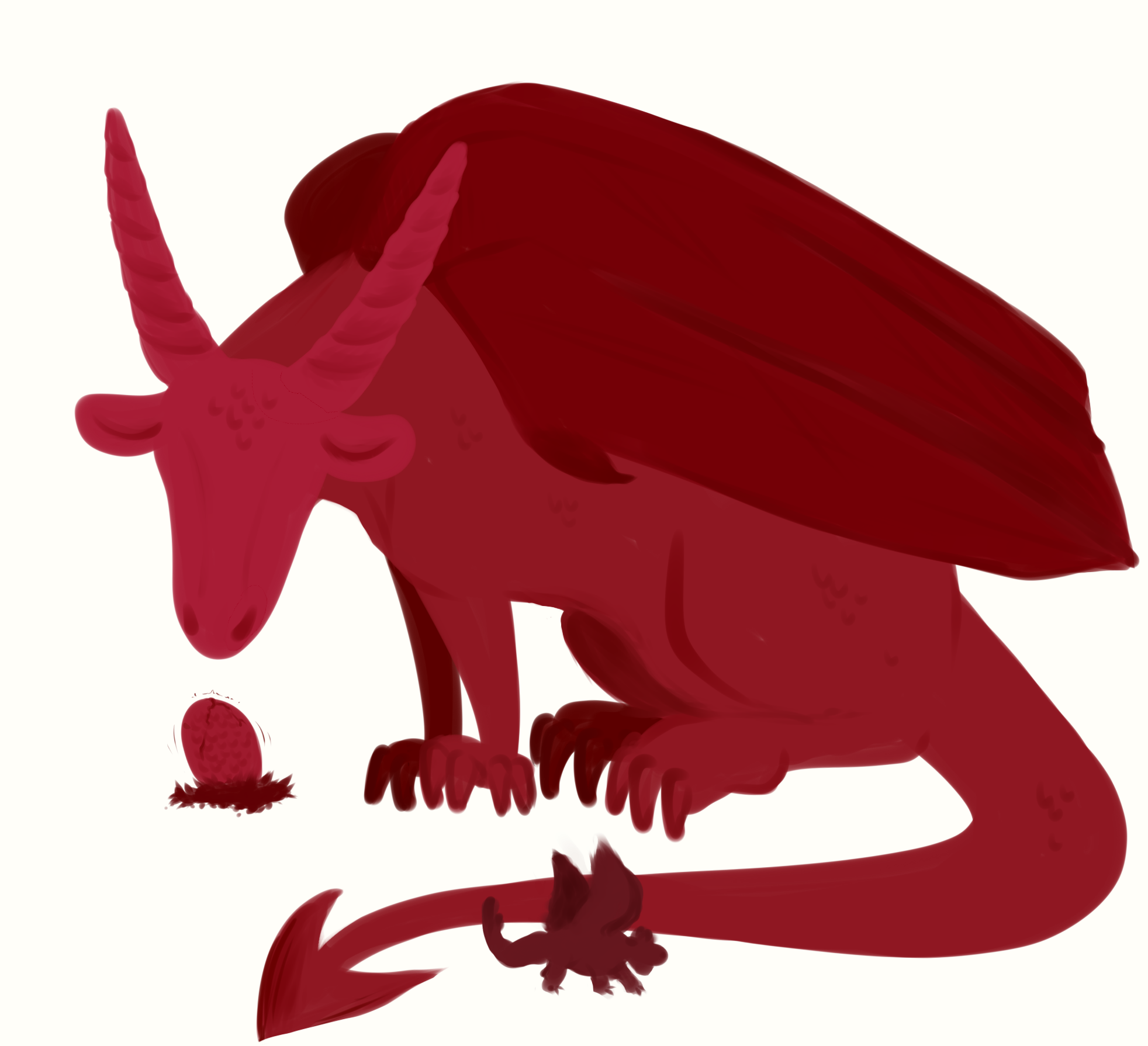
Considered the wisest of her children and known mostly for their pacifistic nature.
With one of the most intricate societal systems known to Esmara, they possess vast knowledge and are often sought out like oracles for insight, advice on important as well as menial issues, or to predict the next harvest or severity of future seasons.
Unfortunately, in the centuries that followed Esma’s second departure from her world, their numbers dwindled as it became apparent their scales are great catalysts for others to wield magic without needing any of their own.
After the events of the Great Divide:
There have been no more sightings of dragons anywhere in Esmara, and they are believed extinct at last. Some are hopeful a scarce few might have managed to escape the carnage and went into hiding, but that seems more like wishful thinking at this point in time.
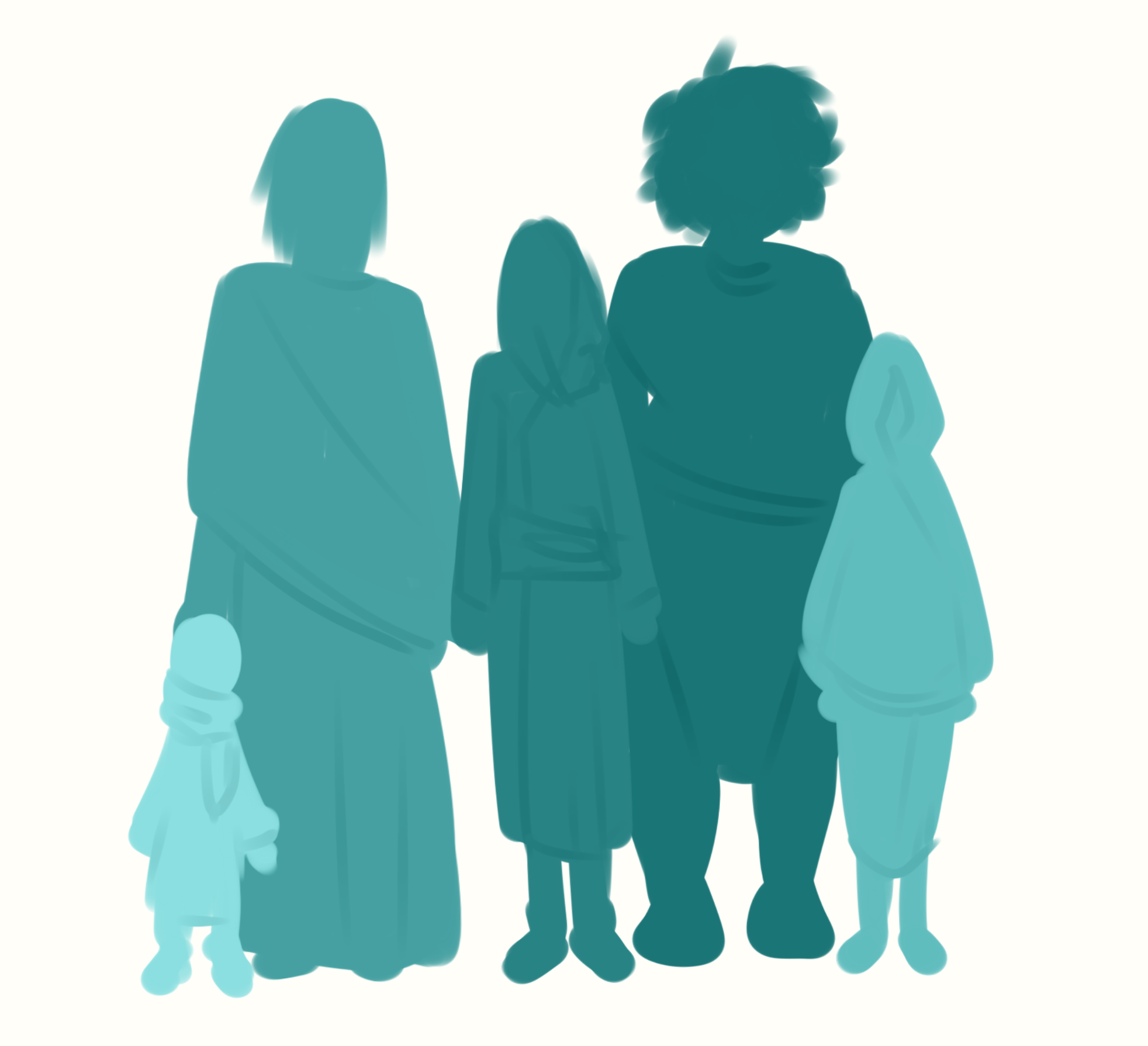
3. Humans
A tenacious species that is vast in number and has spread far and wide in Esmara, with great towns and even kingdoms to show their reach.
Some carry Esma’s blessing in the shape of magic of their own, while others have a magical affinity and can wield magic with the help of catalysts, despite no power of their own.
The rest of them have no magic nor magical affinity, but can be just as crafty and determined.
After the events of the Great Divide:
They spread out even further, some remaining on the east side of the mountains to expand the few kingdoms there even further, while the remainder went into the west to build the Pure Realms, with seven kingdoms entirely by and for humans.
They distrust the other species as well as magic, believing both to have been the cause for the great destruction and carnage.
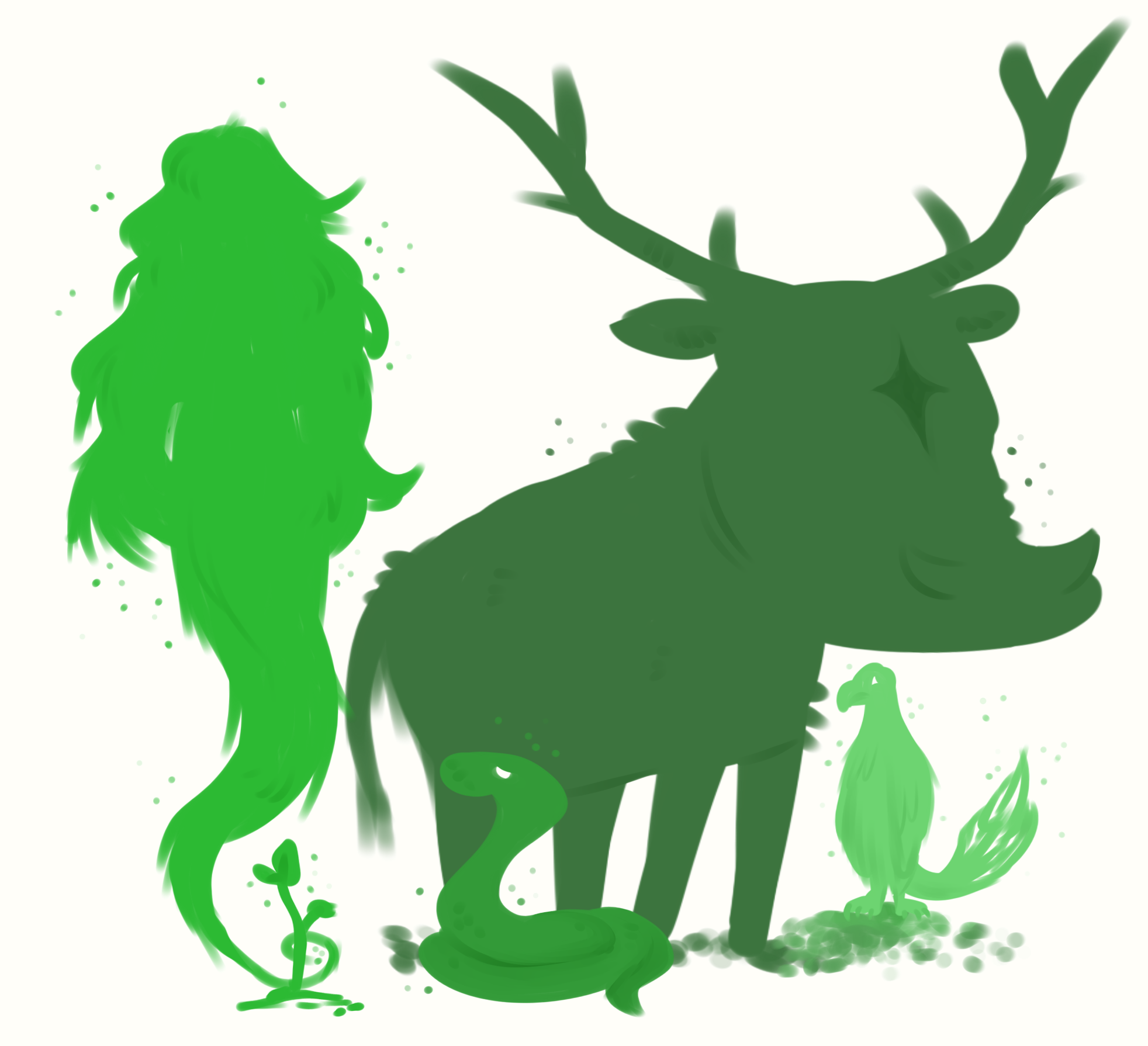
4. Spirits/Nymphs
Tree and water nymphs were the first to tend to nature, before humans learned to work the land. They are spirits that can take on many forms, with magic inherent to the plants or waters they reside in. The merfolk in lakes and oceans are also considered nymphs/spirits in the same sense, though they do not mingle with the creatures of the land, apart from a handful of exceptions.
Over the centuries following Esma’s second visit, there has been a systematic decrease in nymphs all over Esmara as the land was worked more and more by humans. With the dwarfs and orks reigning the mountains, and the elves and Ithinesh dominating the woods, there simply was no more space for the spirits.
Some are said to have passed over into the Fae realms through their circles and pathways, while others appear to have passed on into the Great Beyond.
Some select few were strong enough to build their existence upon faith and became minor deities relying on worship to sustain themselves.
These deities can differ in form, some remaining as their trees or plants or springs, while others changed their shape into those of animals for better reach and freedom, and to harness more belief in themselves and take strength from it.
After the events of the Great Divide:
It isn’t known whether any spirits resided in Esteria, and no documentation was ever made on whether they joined the battles in any meaningful way. The minor deities mostly focused on rural areas and avoided big towns and kingdoms for fear of the faith in them wavering at all the new discoveries made on the daily.
Nothing more is known since, though occasionally a small town might claim to have a deity looking over them, which could well be a solitude spirit still trying to remain.
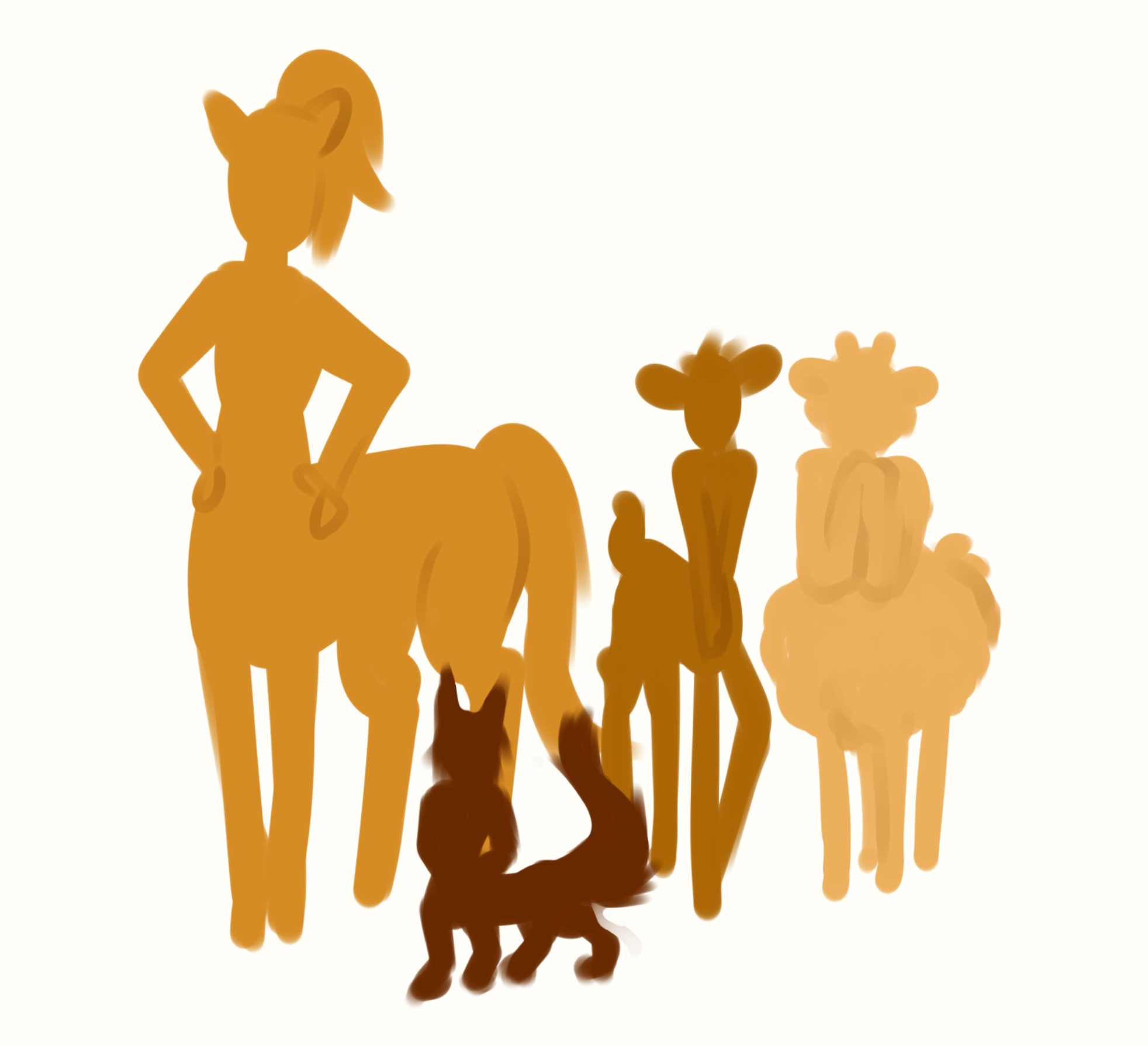
5. Taurs
An accidental species created as aftereffect of Esma’s magic to allow her children to shift form, the taurs are part animal and part human, and come in many forms.
Most frequent are crosses of woodland animals such as deer, weasels and foxes, but also farmland animals have taurs among them, such as horses, cows, sheep and goats. Smaller ones existed, such as rabbits and mice, but they eventually went extinct due to complications during childbirth and the strain on their bodies.
Over the centuries following Esma’s second departure from her world, the taurs have dwindled in number much like the nymphs as nature was dominated by human kingdoms and their desire to expand and conquer, the elves and Ithinesh at their sides.
Many taurs eventually moved to reside on the very outskirts of Esmara, having crossed the dangerous oceans to make their home on the isles around the mainland, where they are still believed to exist today, away from the other species.
After the events of the Great Divide:
There is no evidence to suggest any taurs resided in Esteria. All documentation of them, including what was known of their unusual physique and lifestyles, was lost in the subsequent destruction of the written word that followed the downfall of Esteria.
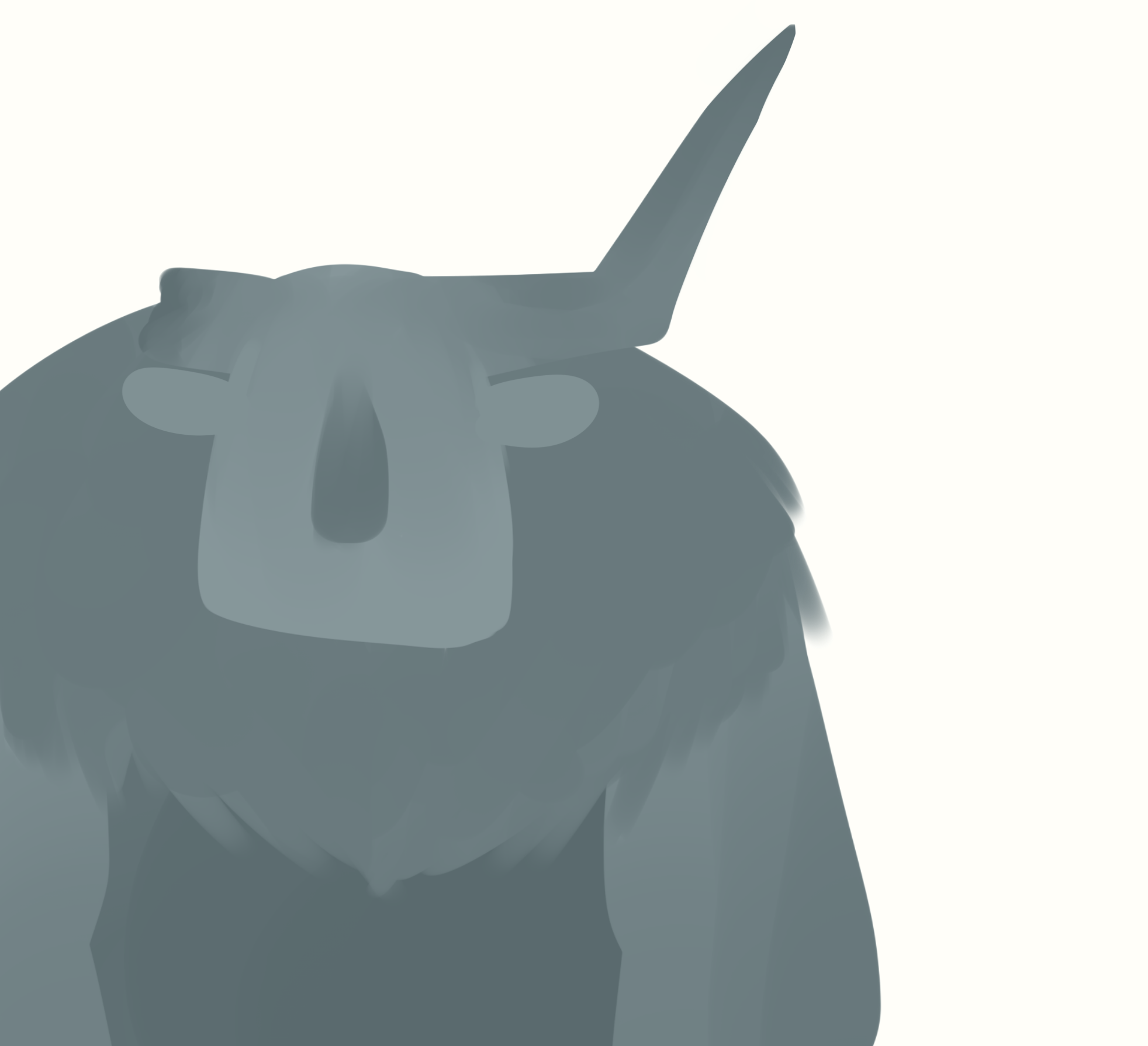
6. Orks
A brutish species known for their strength and violence, but also for their keen memory and sense of justice.
They have a very battle-heavy culture and no written word, though they have a vast collection of spoken tales and nurture these oral traditions in their tribes with remarkable focus on accuracy over dramatization.
It is said they have never forgotten the cry of their deity that caused their birth, as if it is ingrained into their very souls, and they harden their bodies all their lives to keep their kin from similar pain and hardship.
After the events of the Great Divide:
The orks suffered not only terrible losses in number, but also lost their place among the other children of Esma, rendered to nothing but monsters in the minds of men and wolf alike. They had to flee the ruins of the one place they had felt at home in, and have not forgotten the grief of that time, passing it along to younger generations in new tales that are repeated again and again.
They now reside mostly in the mountains of Esmara, especially in the far north and in the mountain range separating the east from the west. Their tribes are scattered, only meeting for battle to build prestige and social standing.
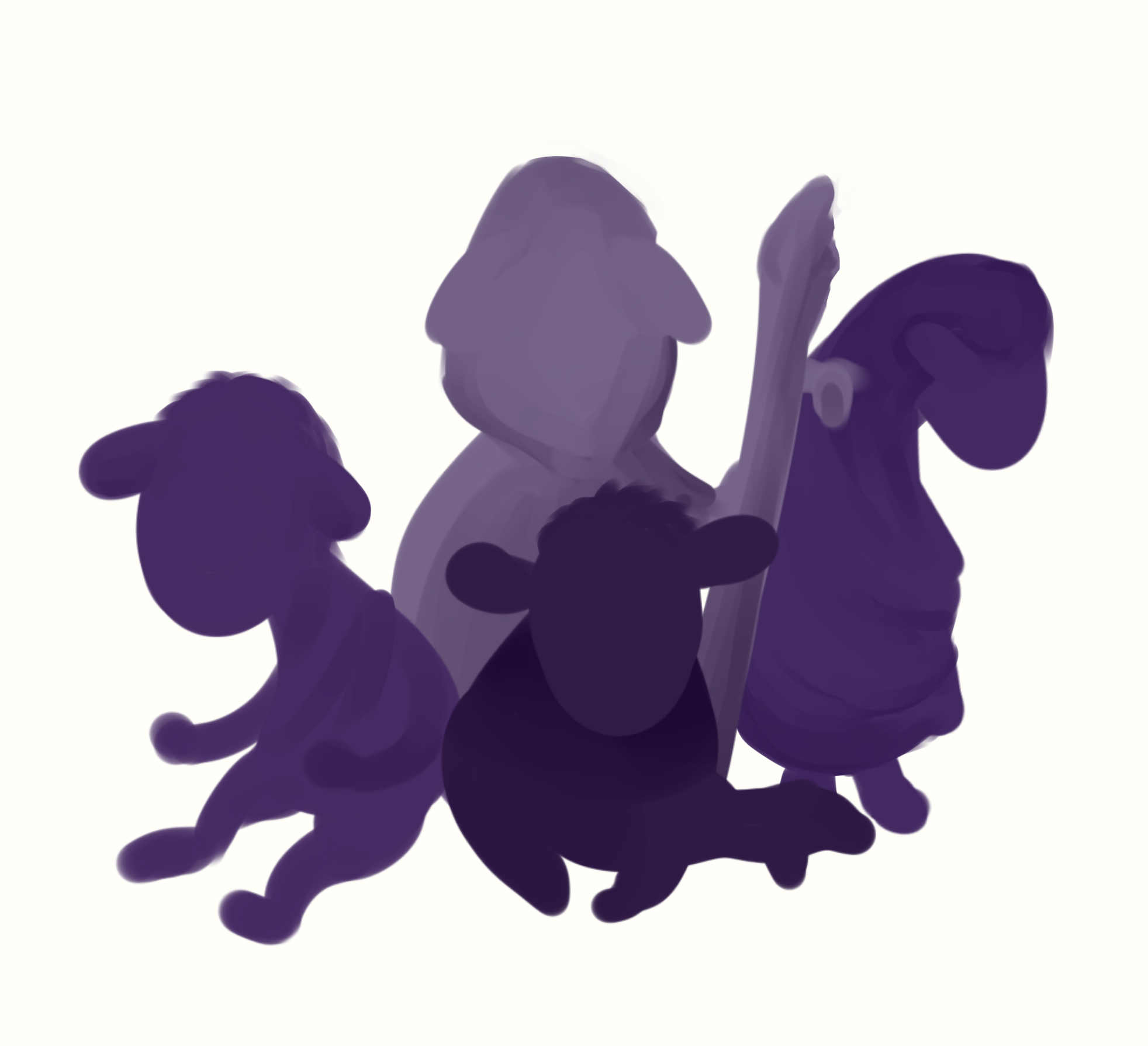
7. Goblins
Skittish and small, the goblins see themselves as lesser than the others and stick to themselves. Always on the outskirts of society, they follow along in that which is left behind to ensure their own survival.
They are often considered vermin by the other species and generally ignored, as they aren’t known to cause any trouble, though there have been raids of goblin caves when farmers believe their crops to be stolen excessively in times of perceived hardship.
After the events of the Great Divide:
Little is known of goblins at the height of Esteria, though there have been remarks or single-sentence references in old journals that indicate the kingdom of unity also reached out to these creatures to learn more about them and offer a place among the rest of Esma’s children as equals.
This has not been considered successful.
The goblins are not known to have joined the battles.
They retreated much like the dwarfs and orks to the mountain regions of Esmara and have remained in the shadows much as before.
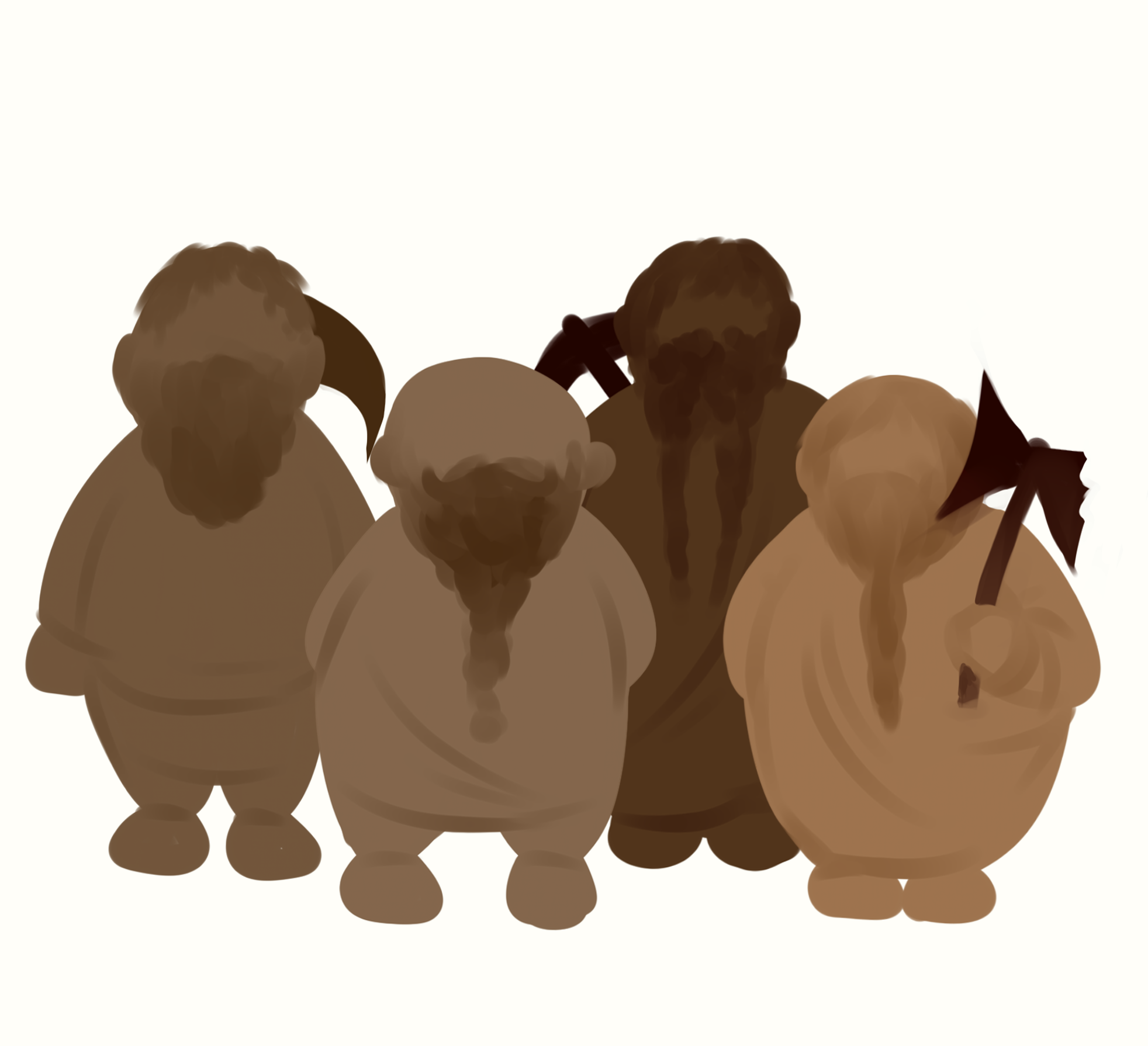
8. Dwarfs
A wary and shrewd species, preferring to remain deep within the earth and stone they make their homes in. They live in massive clans and have entire underground kingdoms of their own, and are known to be diligent and tireless workers that take great pride in what they create, may it be tunnels, tools, trinkets or weapons.
Rarely, if ever, are they willing to share their work or methods, and many of them will never step out of their caves in their lives, the overworld considered unsafe, unimportant, and too open for the likes of the dwarfs.
After the events of the Great Divide:
Forced into a fight they didn’t wish to join, the dwarfs lost many of their kin and were forced to leave behind much of their culture and craft in the ruins as they fled to join the clans already residing in the mountains.
Their hostility for the other species, but particularly orks and humans - and, even more so, magic - has since only grown. While there are clans known to allow trade with human towns, most do not interact with other species unless it is to meet them in battle and protect their homes.
Guests of Esmara
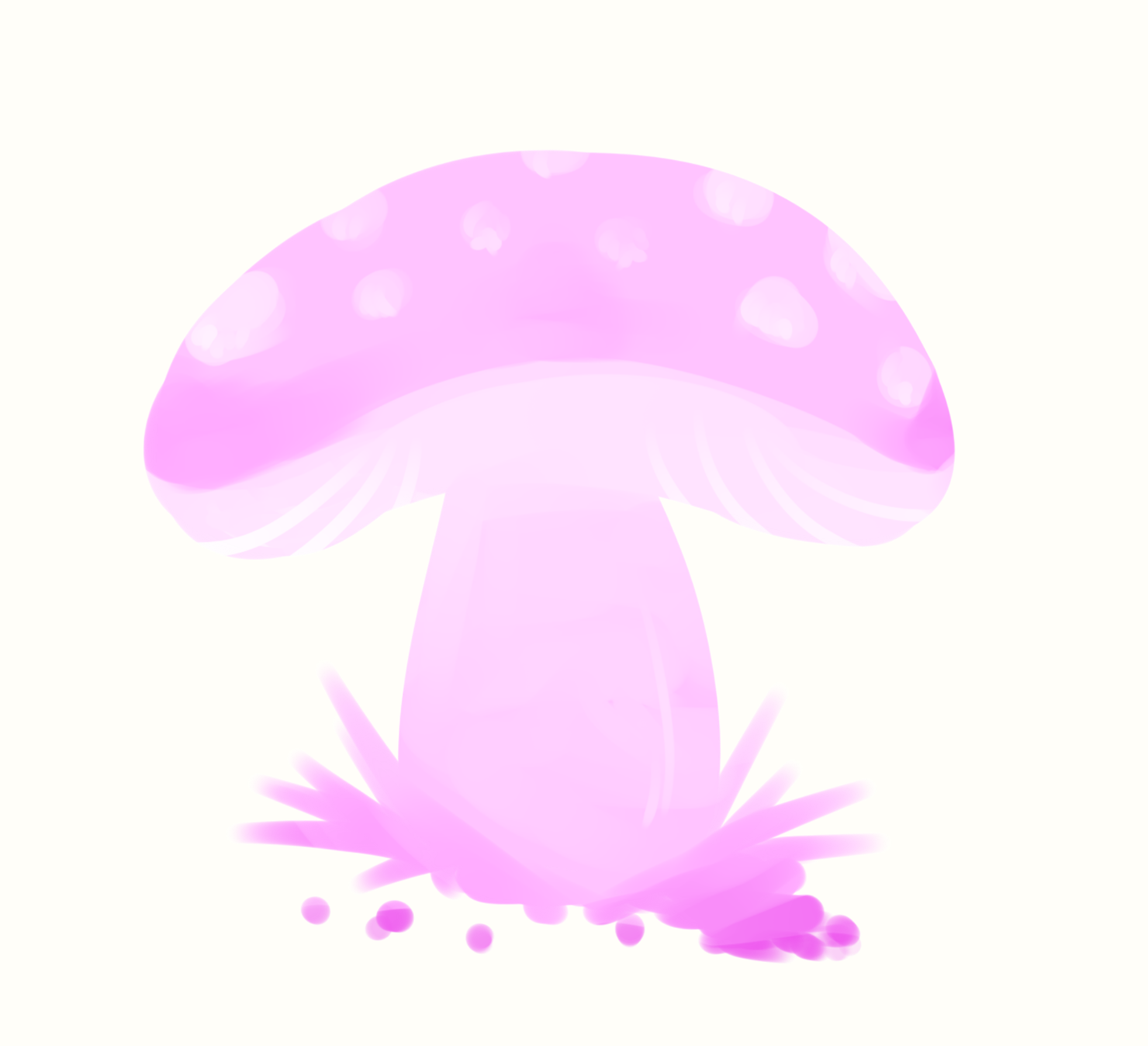
Faeries / The Fae Folk
Nobody quite knows when they came or where they came from. At some point, a mushroom circle simply popped up, then some more, and when some of Esma’s children stepped into one unwittingly, they found themselves in a world unlike their own, with a magic new to them.
The faeries have since made themselves comfortable in Esmara and follow their own ways and minds, not interacting with the other species often, if at all.
They are known as tricksters and considered dangerous to exhausted and witless travelers, though they aren’t generally malicious in nature unless provoked.
After the events of the Great Divide:
It isn’t known whether the Fae folk even noticed the creation, thriving, and eventual fall of Esteria, or the hardship that followed for Esma’s children. It appears their realm was closed during this time, potentially sensing the threat afoot ahead of time, or maybe due to entirely unrelated circumstances.
While their realm is now open again, they continue to only rarely interact with any of Esmara’s inhabitants other than to play tricks or cause some minor mischief.
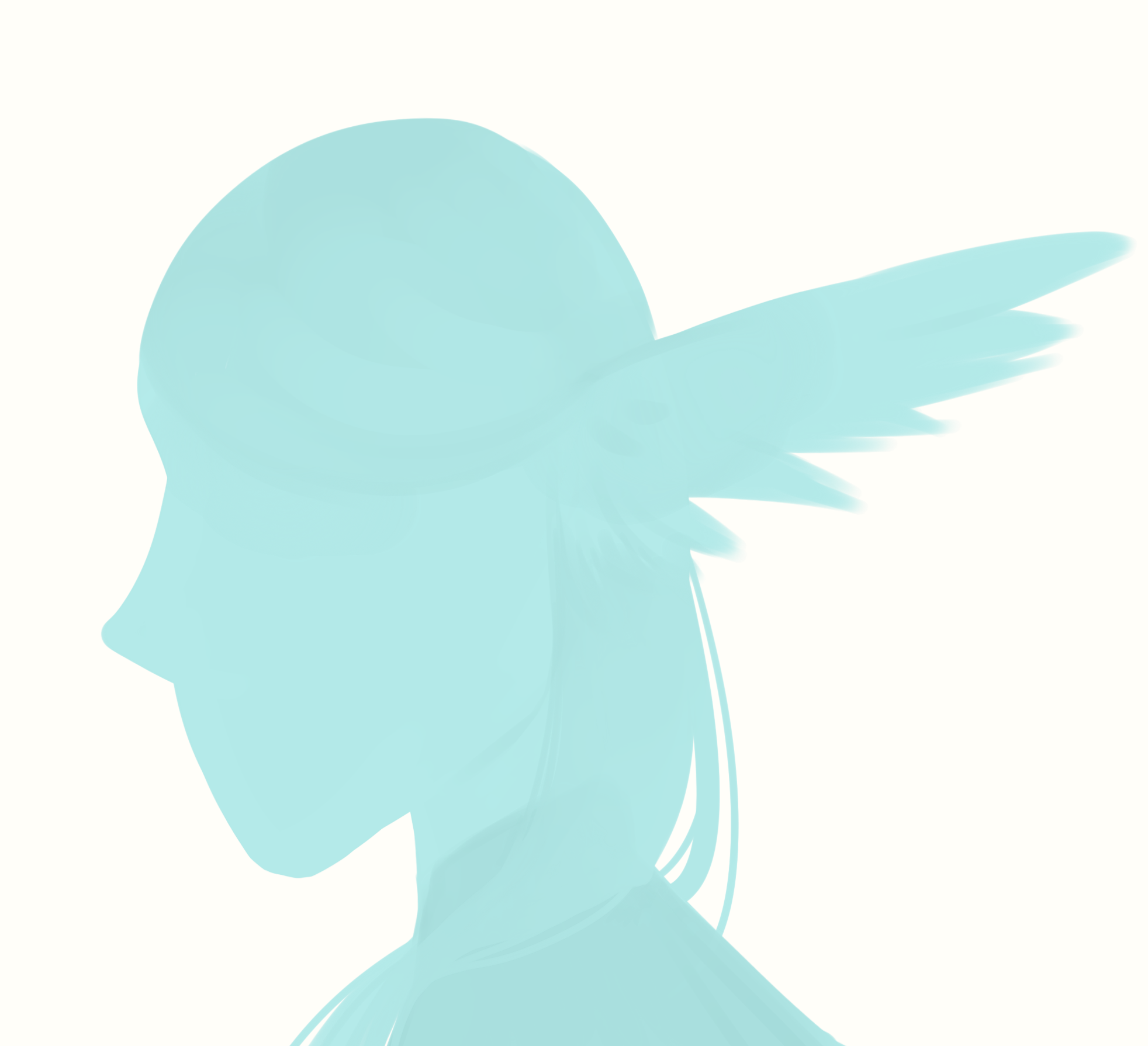
The Elves
During Esma’s second stay on her world, the elves arrived. Graceful and proud creatures, they wish to learn all of Esmara’s tales to bring them home to their own home, a world without change, perfect but stagnant.
They possess magic of their own, and after being embraced as friends by Esma’s children, got to make their home here freely and shared their wisdom and ways.
After the events of the Great Divide:
Even before the final battle, there was much strife and fighting among the elves as their views differed on how to continue their lives in this world.
Ultimately, they split into two separate clans, one taking their kin to the far east into the woods they then made their own, while the other clan went north to adopt a nomadic lifestyle.
Both clans have since shut themselves off from the other species, and making contact isn’t advised.

The Ghalcari
While their welcome is questionable at best, the Ghalcari have entered and lived on Esmara at various points in time since Esma's second departure from her world.
Little is known of these strange creatures other than that they are considered harbingers of war and bloodshed. It isn’t known where they truly come from, only that they rarely come alone.
While their shapes are sometimes referred to as being similar to those known among Esma’s children, they are generally described as cruel, bloodthirsty and merciless, and are mostly known for the destruction they cause.
After the events of the Great Divide:
No reference has been found of the Ghalcari in the battles, neither before or after Esteria’s fall. They remain a mystery, and are by now often written off as folktale to scare naughty children.
Some mentions of ‘Gateways’ have been found in ancient journals that survived the fires. These carry similarities to the faerie circles that allow the Fae folk to cross over into Esmara, which has led people to further brush off the existence of these monsters as mere tricks played by the Fae.


© AJJSmith
2026